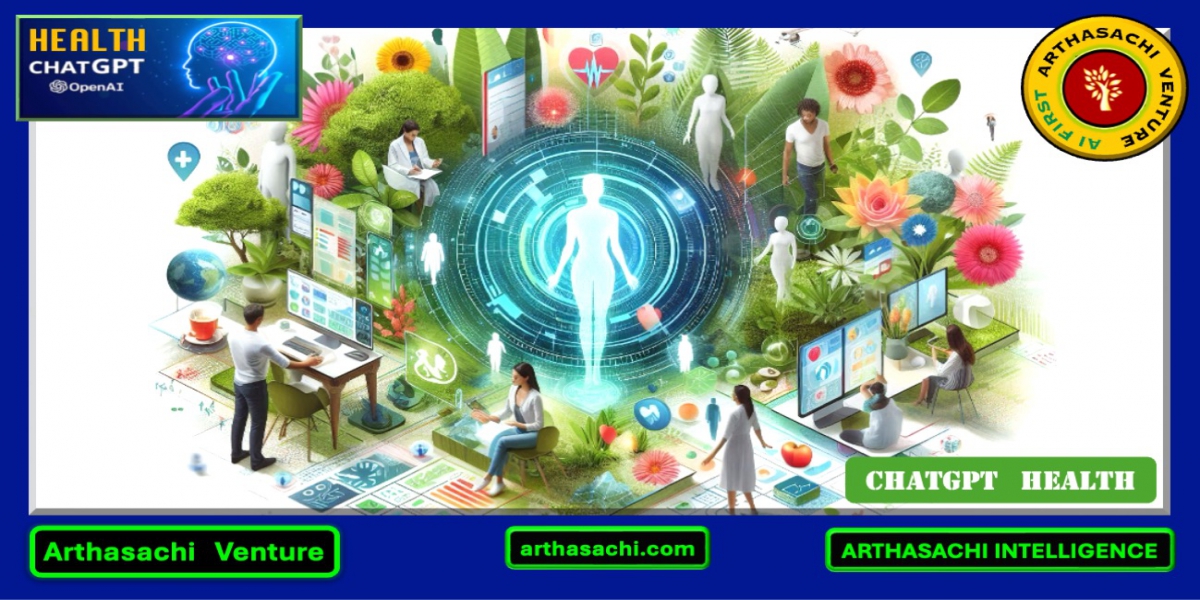
ChatGPT Health: Redefining the Future of Personal Wellness Through AI
Artificial Intelligence has already transformed how we work, learn, and communicate. Now, it is quietly — yet profoundly — reshaping one of the most personal and impactful domains of human life: health.
With the introduction of ChatGPT Health, OpenAI is not merely adding a feature to its flagship AI product. It is laying the foundation for what could become the world’s most widely accessible personal health intelligence layer — one that empowers individuals to understand their bodies, their data, and their care journeys like never before.
This Special report explores:
- What ChatGPT Health truly is
- Why it matters now
- How it works
- Its implications for consumers, healthcare systems, and digital health innovation
- And why it may define the next decade of AI-driven wellness

1. The Global Health Information Crisis
Despite unprecedented advances in medicine, health understanding remains broken.
Today:
- Medical data is fragmented across hospitals, labs, apps, and devices
- Clinical language is often inaccessible to everyday people
- Appointments are short, rushed, and information-dense
- Patients leave with more questions than answers
At the same time, people are hungry for guidance:
- Over 70% of adults search online for health information before seeing a doctor
- Millions turn to social media for wellness advice — often unreliable
- Health anxiety and misinformation are rising globally
The world does not suffer from a lack of data — it suffers from a lack of clarity.
This is the problem ChatGPT Health is designed to solve.
2. What Is ChatGPT Health?
ChatGPT Health is a dedicated health experience inside ChatGPT that allows users to:
- Upload medical reports, prescriptions, and lab results
- Connect wearable and wellness apps
- Ask questions about symptoms, trends, and test results
- Receive clear, personalized explanations
- Prepare for doctor visits with structured summaries
- Track lifestyle progress over time
Unlike traditional health apps that show numbers, ChatGPT Health explains meaning.
It turns:
- Data → Insight
- Reports → Understanding
- Confusion → Confidence
This is not a diagnostic engine.
It is a health intelligence companion.
3. Why ChatGPT Health Is Different From Every Health App
Most digital health tools focus on measurement.
ChatGPT Health focuses on interpretation.
Traditional Health Apps ChatGPT Health
Steps, calories, vitals Meaning behind trends
Static dashboards Conversational understanding
Generic tips Personalized context
Isolated data Unified health narrative
Passive tracking Active engagement
Instead of asking:
“Did you walk enough today?”
ChatGPT Health asks:
“How is your activity affecting your energy, sleep, and stress over time?”
This shift — from tracking to thinking — is what makes the platform transformative.
4. How the System Works
4.1 Core Architecture
ChatGPT Health is built on:
- OpenAI’s latest large language models
- Secure health-data compartmentalization
- User-controlled data permissions
- Context-aware reasoning engines
Health conversations are isolated from normal chats and are:
- Encrypted
- Not used to train public AI models
- Fully deletable by the user
5. Privacy, Trust & Ethics: The Foundation
Health data is sacred. OpenAI has placed trust at the center of ChatGPT Health.
Key Safeguards
- No health data used for model training
- No ad targeting from health conversations
- User-owned data with instant deletion rights
- Clear consent before any integration
- Compliance with global data protection norms
In an era of digital surveillance, ChatGPT Health positions itself as a privacy-first health AI — a rarity in modern tech ecosystems.
6. Use Cases That Matter
6.1 For Individuals
- Understanding blood test results
- Managing chronic conditions
- Mental wellness tracking
- Fitness optimization
- Medication clarity
- Nutrition planning
6.2 For Families
- Elderly care coordination
- Pediatric growth tracking
- Caregiver support tools
- Appointment preparation
6.3 For Professionals
- Doctors: better-informed patients
- Therapists: reflective journaling tools
- Coaches: behavior insights
- Insurers: improved health literacy
7. What ChatGPT Health Is NOT
It is not:
- A diagnostic engine
- A replacement for doctors
- A prescription authority
- A medical device
It is:
- A decision-support layer
- A comprehension engine
- A wellness intelligence system
- A personal health guide
This distinction is critical to ethical adoption.
8. Market Context: Why This Matters Now
The global digital health market is projected to exceed $900 billion by 2030.
Three mega-trends are converging:
- Wearables explosion
- Remote healthcare normalization
- AI becoming mainstream
ChatGPT Health sits at the intersection of all three.
If successful, it will not just be a feature — it will become:
The default interface for personal health intelligence.
9. Strategic Implications for Healthcare
9.1 Democratization of Health Understanding
People no longer need to decode medical jargon alone.
9.2 Reduced System Burden
Better-informed patients → fewer unnecessary visits → better resource allocation.
9.3 Shift from Reactive to Preventive Care
When people understand trends early, disease becomes manageable instead of catastrophic.
10. The Emotional Layer: Why Users Will Adopt This
People don’t just want health tools.
They want reassurance.
They want:
- Someone to explain
- Someone to listen
- Someone to remember
- Someone to connect the dots
ChatGPT Health becomes that presence — not as a doctor, but as a compassionate intelligence layer.
In moments of anxiety, uncertainty, or confusion, users gain:
Clarity instead of chaos.
Understanding instead of overwhelm.
This emotional trust is what drives lasting adoption.
11. Risks & Realism
No innovation is without risk:
- Over-reliance on AI
- Misinterpretation of guidance
- Regulatory uncertainty
- Data misuse fears
OpenAI’s challenge will be to:
- Maintain transparency
- Strengthen guardrails
- Partner with healthcare ecosystems
- Keep humans in the loop
12. The Road Ahead
ChatGPT Health is not the endgame.
It is the beginning of AI-native healthcare.
In the next decade, we may see:
- AI copilots for doctors
- Real-time wellness forecasting
- Preventive health scoring
- Personalized longevity planning
- Mental health companions at scale
ChatGPT Health is the first widely adopted step in that direction.
Conclusion
ChatGPT Health represents one of the most meaningful applications of artificial intelligence in modern times — not because it replaces doctors, but because it empowers people.
It brings:
- Understanding to complexity
- Calm to uncertainty
- Agency to individuals
For users, it is a companion.
For healthcare, it is an accelerator.
For society, it is a quiet revolution.
And for the future of AI — this is where intelligence becomes human-centric.
Top News






Other News







MARKETS
WEALTH
ECONOMICS
START UP
TECHNOLOGY
BUSINESS
Alliances and Partners

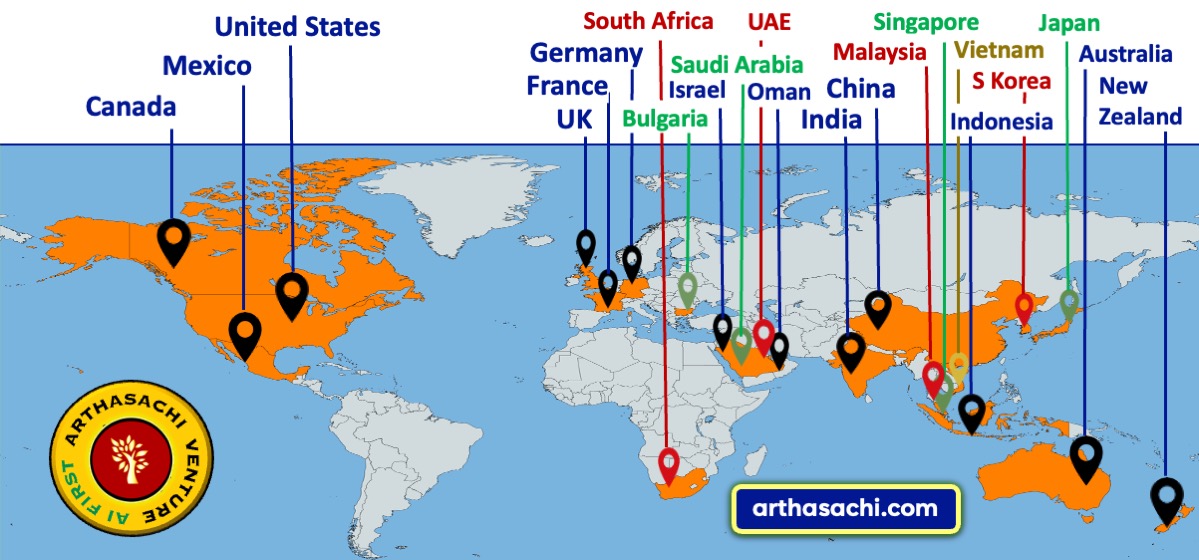
Arthasachi Venture Footprints
Apps
Dowload Our "Arthasachi Venture Wealth" Apps
Apple IOS App

Andriod App